All Things Performance #7
3 concepts = thoughts I've had, things that I've seen, and ideas / hopes - all in the health & performance space. Once a week.
this week:
viewing rugby through a sports science lens
the routine that LeBron James uses to play back to back games
the 10-3-2-1 sleep formula
thinking out loud
some of my thoughts this week
I shared some thoughts on rugby through a sports science lens.
The discussion of intensity always interests me, in particular how commentators discuss intensity. You will often hear “the international game is more intense” [compared to domestic competitions], and even suggestions that “the game is faster”.
Well — published data from my PhD suggests that in actual fact, the international game is actually less about distance & high speed running, but is more intense from a collision & effort perspective. ‘Effort’ in this conversation I refer to as the number of high metabolic load efforts in relation to the metabolic distance accumulated. If you are interested in more detail on these, please let me know, or go to https://statsports.com/ to see more info.
A short YouTube video I created discussing my thoughts on the 6 nations:
https://youtube.com/shorts/WN9xR5keE4E?si=kzFOYM7hyd9abH-E
through the lens
things that I’ve seen this week
I spotted this interview with LeBron James, on what he does when to recover from and prepare for a back-to-back game (2 consecutive days with games in the NBA!).
his ‘exact’ routine from the video:
Cold water immersion
Hyperbaric oxygen chamber session
Nap
played video games whilst using intermittent pneumatic compression (Normatec) on his legs
shower & change
head to stadium
normal routine - activation, treatment, rehab, stretch, lift,
mental preparation
pre-game nutrition
It shows what athletes at the highest level need to do to prepare for extreme competition demands (2 games in 2 days) — especially for an athlete like LeBron. Bearing in mind he is 41 years old still playing at the highest level, and is arguably one of the greatest athletes of all time!

the drawing board
ideas, brainstorming, etc
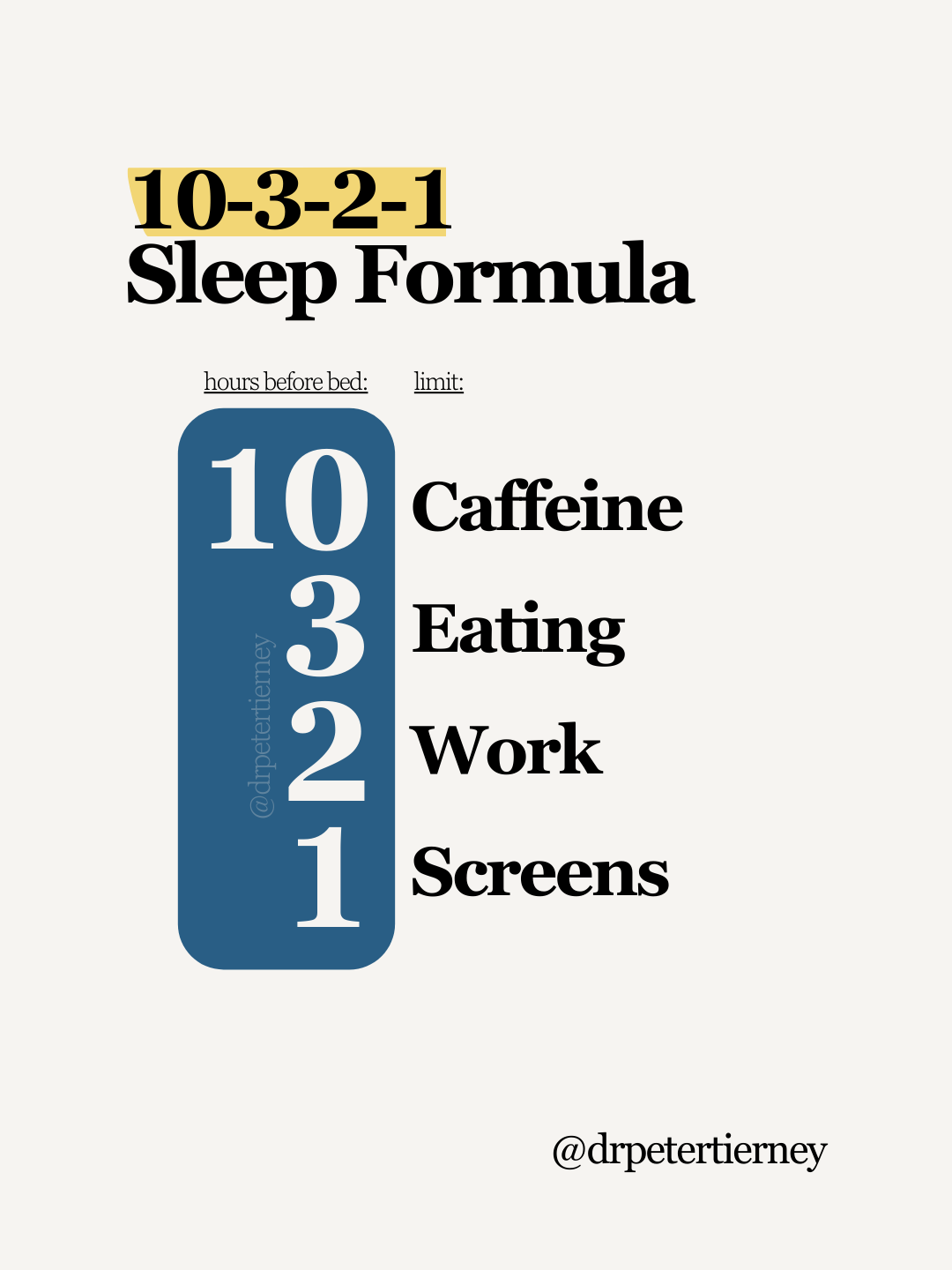
One of the visuals that has resonated with many of my network is the a sleep formula — the 10-3-2-1 Sleep Formula.
These are an easy to follow set of principles / rules for people to help support sleep. Whilst I don’t think these are hard rules for everyone — they are mostly good principles to follow where possible (assuming sleep consistency is in place already).
Approaching sleep time:
— limit caffeine within 10 hours
— limit eating large meals within 3 hours
— limit work within 2 hours
— limit screen time within 1 hour
There may be situations where you need caffeine if performing late (e.g., competitive athletes). I’d suggest keeping this for “competition” and restricting for “training”
To limit eating large meals, this is not me saying that you can’t eat anything within 3 hours of going to sleep. Sometimes – the need for fuel & recovery is important, and carbs & protein can help sleep too.
Limiting screen time is mostly due to the fact that screens usually just delay the onset of sleep (i.e., they stop you going to bed earlier). Blue light may have an influence, but most of it is just taking time away from your sleep opportunity.